MJJA 2026 Spring Conference
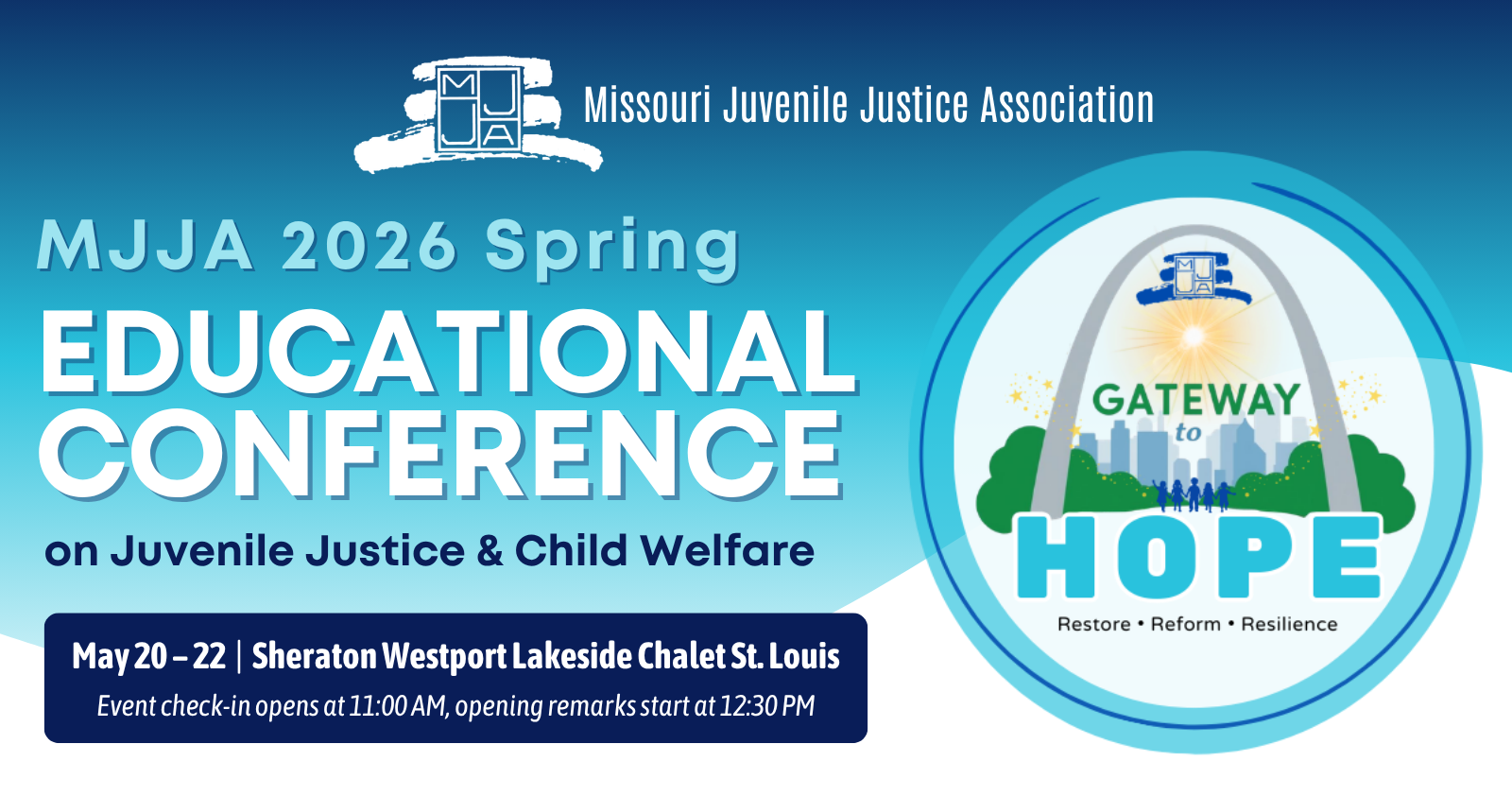
Join the Missouri Juvenile Justice Association for our three-day Spring Conference, a comprehensive gathering dedicated to the heart of child welfare and juvenile justice. This isn’t just a conference; it’s a mission-driven space where Missouri’s leaders and agencies unite to sharpen our systems and advocate for the children we serve. Come prepared to bridge the gap between policy and practice, ensuring every youth in our state has a path toward a brighter tomorrow.
This conference is tailored for:
Juvenile and Family Court Personnel, Juvenile Detention Professionals, Judges, Attorneys, Children’s Division, School Resource Officers, Division of Youth Services, Law Enforcement, Guardians ad Litem, Court Appointed Special Advocates, Educators, Child Advocacy Centers, Child Care Providers, Youth Service Professionals, Social Workers, Private Practitioners, School Representatives, Parents, Community Leaders, State Lawmakers, Policymakers, School Resource Officers and anyone interested in juvenile justice issues.
Continuing Education Credits available from:
• MO Bar accredited for CLEs
• University of MO Columbia—School of Social Work CEUs
• POST Hours
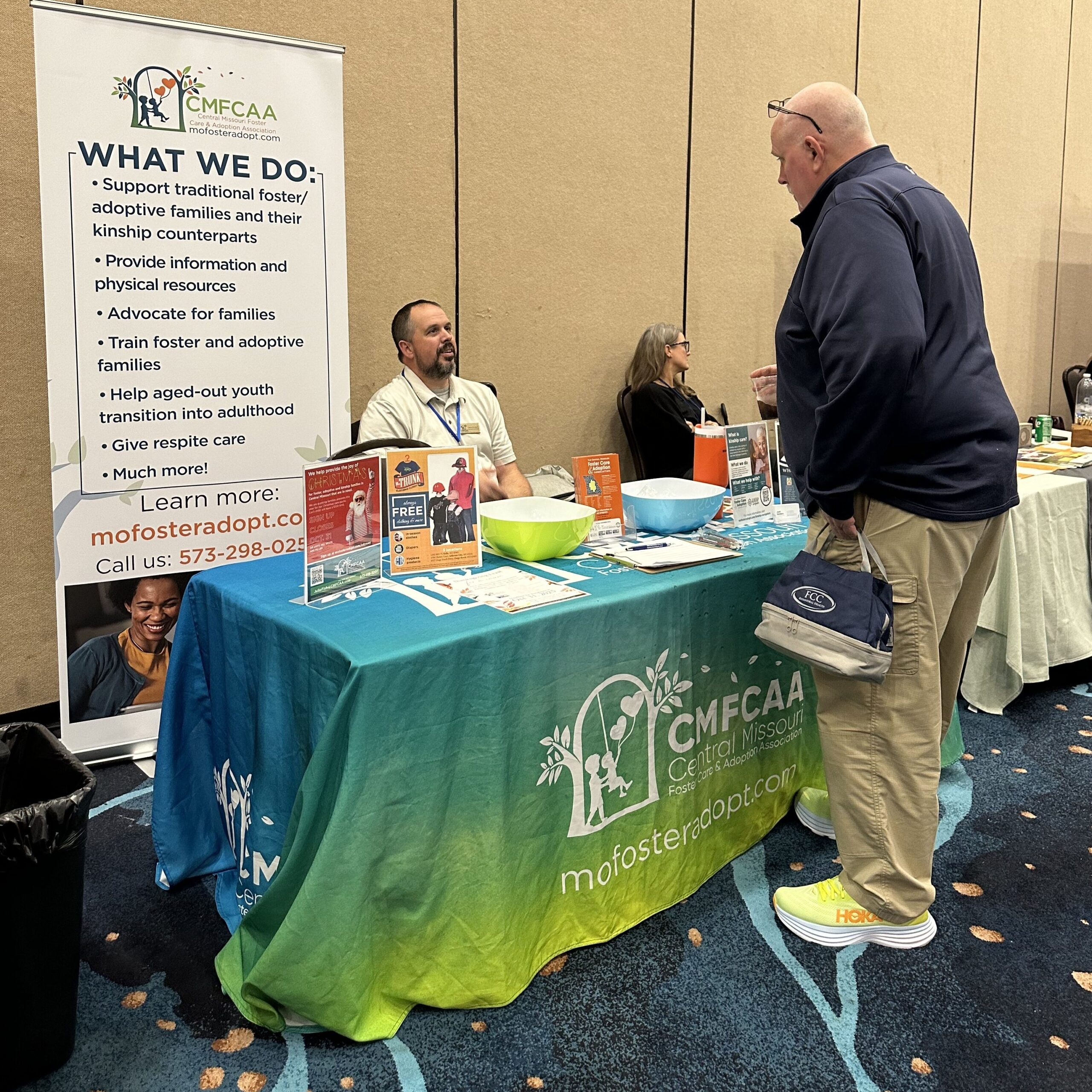
Be an Exhibitor at the Conference
Register & Pay by Invoice
Become a Member of MJJA
Hotel and Reservation Link
Reserve your room at the exclusive MJJA per diem rate of $150/night for May 20th and 21st. Room Block Cut Off Date Extended Until: May 1, 2026
Sheraton Westport Chalet Hotel St. Louis
191 Westport Plaza, St Louis, Missouri, 63146
+1 314-878-1500
Google Maps | Hotel Website
Please note that the Sheraton does not have general availability for the night of May 19th. To better accommodate our attendees’ travel, the conference features a later start on Wednesday, May 20th. Registration will open at 11AM, with the official program kicking off at 12:30PM. We recommend booking your stay starting the night of the 20th to align with the start of our programming.

Plenary Speakers
Day 1 Afternoon Plenary featuring:
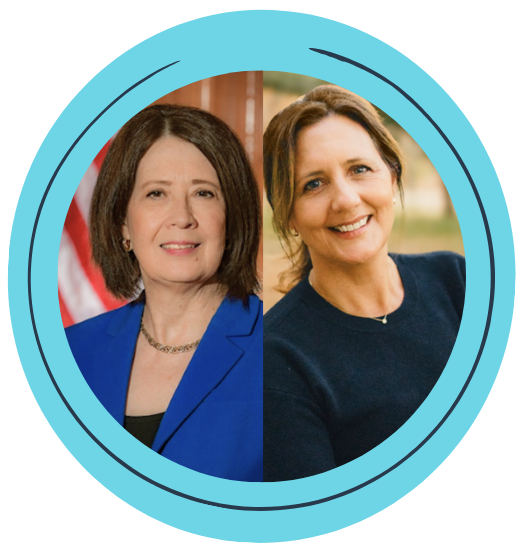
Judge Joyce, Senior Judge and JJ Gossrau, Director of Young Adult Services, Early Psychosis Care, and System of Care Expansion at Missouri’s Department of Mental Health
Judge Joyce and JJ Gossrau will kick start our conference with a dual presentation. This session will discuss the lessons learned from the statewide 3-year effort of Upstream Mapping in Missouri and the System of Care efforts underway to help improve outcomes for children, youth and families in crisis.
Judge Pat Joyce served on the trial bench in Cole County for 26 years. During that time she served as a juvenile court judge as well as starting treatment courts in 1998. She was also on numerous committees for the Supreme Court. She has been a national trainer in juvenile treatment courts as well as veterans courts. Prior to serving on the bench she was an assistant prosecutor for Cole County and worked for legal services in Jefferson City. Since her retirement she has been judicial engagement coordinator for the Upstream project and Sequential Intercept Mapping. She is delighted that the Upstream project covered all 46 circuits and finished with the last one yesterday.
JJ Gossrau is the Director of Young Adult Services, Early Psychosis Care, and System of Care Expansion at Missouri’s Department of Mental Health. In this role, she leads Missouri’s Early Psychosis Care Center advances young adult initiatives, and supports the growth of System of Care teams across the state to improve access to early intervention and coordinated supports for youth and families, JJ earned her Master of Social Work from the Brown School of Social Work at Washington University in St. Louis and is a licensed clinical social worker. She is passionate about transforming psychosis care and enhancing systems that help young people thrive.
Judge Joyce’s Plenary Topic: Lessons Learned from Upstream
Description: The program will discuss the findings from the Upstream project that was conducted in all 46 circuits in the State. Upstream was an interactive workshop that had over 2500 attendees to explore opportunities to provide and enhance services to prevent formal cases in both child welfare and juvenile justice.The program will feature successful Systems of Care that will discuss their successes and challenges in maintaining continued services and collaboration among service providers in their communities.
JJ’s Plenary Topic: Missouri System of Care Meets Upstream- Strength-based, Solution Focused, Collaborative
Description: All Missouri judicial circuits mapped their juvenile and child welfare systems in a statewide initiative lead by National Center for State Courts known as Upstream. The judicially led initiative involved stakeholders providing services to juveniles to enhance preventative services and to keep juveniles out of the court system. The workshop discusses planning, implementation, lessons learned from the Upstream model and the role of Systems of Care in providing structure and accountability at the local level. Panelists include: Kimberly Farris Wilson, Cheri Thurman, Lorenda Roberson, Noel Land-Roeder.
Day 2 Morning Plenary featuring:

Dr. Aaron Cotkin, Social Science Research Specialist with the U.S. Secret Service National Threat Assessment Center (NTAC)
Dr. Cotkin is a Social Science Research Specialist with the U.S. Secret Service National Threat Assessment Center (NTAC) where he participates in the Center’s mission to conduct research and provide trainings, consultations, and information-sharing on threat assessments and targeted violence. NTAC’s focus is understanding, and developing methods to prevent, violence that targets government officials and facilities, public spaces, K-12 schools, university campuses, and workplaces.
Prior to joining NTAC in 2019, Dr. Cotkin taught college courses in political science and ethics, and was managing editor of The Adam Smith Review, a peer-reviewed academic journal. Dr. Cotkin earned a Ph.D. in political science from University of California, San Diego.
Plenary Topic: Behavioral Threat Assessment: A Framework to Prevent Targeted Violence
Description: For over 20 years, the U.S. Secret Service National Threat Assessment Center (NTAC) has conducted research on the thinking and behaviors of those who commit acts of targeted school violence in an effort to prevent future tragedies. Key findings from this research indicate that establishing multidisciplinary threat assessment teams and encouraging school communities to report concerning behaviors are critical steps in the prevention of targeted violence. This presentation will highlight past incidents as well as relevant findings and recommendations from NTAC’s latest research on targeted school violence and interrupted school plots in the United States. It will also focus on how communities can use a multidisciplinary approach to identify, assess, and intervene with students exhibiting concerning or threatening behaviors as early as possible.
See Dr. Cotkin’s workshop topic below.
Day 2 Afternoon Plenary featuring:
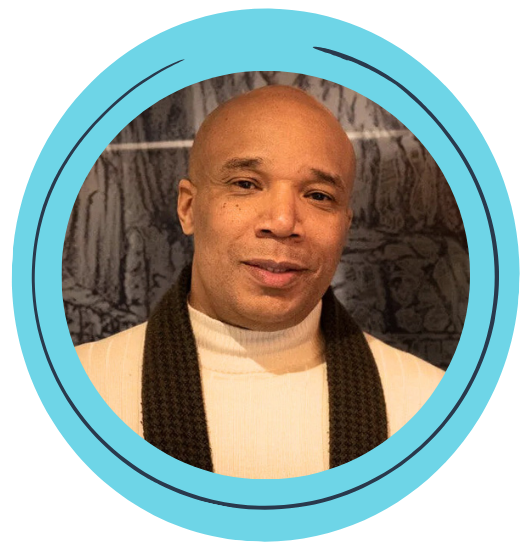
James Clark, VP Division of Public Safety and Community Response, Urban League of Metropolitan St. Louis
For over 25 years, James R. Clark has served as a transformative thought leader in St. Louis, pioneering innovative models for neighborhood stabilization and violence intervention. His work is defined by a “boots-on-the-ground” philosophy that meets citizens exactly where they are—on the porch, in the living room, or within open-air drug markets. Through his Serving Our Streets initiative, Clark utilizes the unique N.P.L. (Neighborhood, Porch, Living-room) lens to provide direct case management and household engagement, while the Urban Opioid Triage model offers life-saving treatment enrollment directly within high-traffic drug markets.
Beyond social services, Clark developed the Urban Gun Violence De-Escalation Network, a groundbreaking program that utilizes third-party mediators to resolve active conflicts before they turn fatal. The success of this model has led to replication requests in cities such as Birmingham, Wilmington, and Kansas City. Clark further strengthens community infrastructure through faith-based mobilization, activating over 500 regional churches through the Pulpit to Porches and Grill to Glory programs. Additionally, his Operation: Clean Up – Build Up partnership with the Regional Business Council targets urban blight by facilitating the demolition of abandoned properties through minority-owned firms.
A native of North St. Louis and a veteran of the U.S. Army, Mr. Clark’s expertise has earned him profound national recognition. In 2019, he received an award from the President of the United States at the Federal Project Safe Neighborhood National Conference. Having been featured on CNN, MSNBC, and the cover of TIME magazine, Mr. Clark remains a preeminent voice in American community organizing and a tireless advocate for neighborhood safety.
Plenary Topic: St. Louis Metropolitan Area Gun Violence De-Escalation Initiative
Description: James Clark will take a deep dive into the aspects of the St. Louis Metropolitan Area Gun Violence De-Escalation Initiative.
See Sean’s workshop topic below.
Day 3 Morning Plenary featuring:
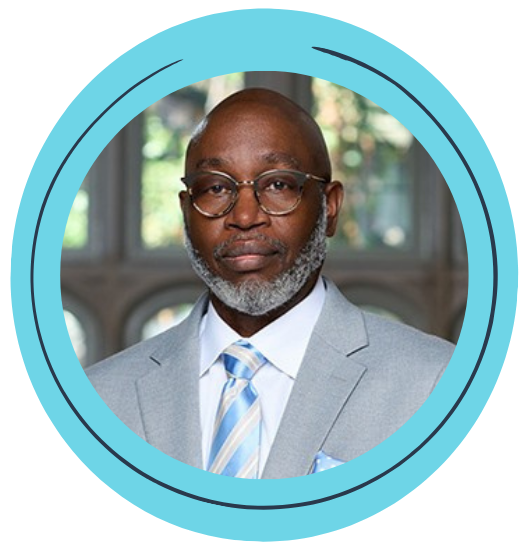
Dr. Sean Joe, founding Principal Director of the Race and Opportunity Lab, HomeGrown StL
Sean Joe, PhD, is the Benjamin E. Youngdahl Professor of Social Development at the George Warren Brown School of Social Work at Washington University in St. Louis. He is the founding Principal Director of the Race and Opportunity Lab, HomeGrown StL. He is a nationally recognized authority on suicidal behavior among Black Americans and is expanding the evidence base for effective practice with Black boys and young men. He writes about population-level approaches to social problems affecting Black males and other historically underserved populations, and about Community Science as a new perspective on knowledge co-produced by academic researchers and community members, with the potential to enrich science by broadening our participatory research theories, designs, analytical methods, and the use of technological innovation. Joe’s epistemological work focuses on the concept of race in the medical and social sciences.
Plenary Topic: From the Courtroom to the Community: How Economic Mobility and Mental Health Reduce Recidivism Among Disconnected Youth and Young Men
Description: What does it actually take to break a cycle? This plenary session draws on community-based research and direct intervention experience with Black youth and young men in St. Louis to examine the deeply interconnected relationships among economic mobility, mental health, and public safety. Too often, juvenile justice and child welfare systems intervene at the point of behavior — without addressing the economic instability, financial shame, and identity disruption that drive that behavior in the first place.
Dr. Joe will challenge attendees — practitioners, judges, caseworkers, educators, and attorneys — to move beyond deficit-based thinking and toward evidence-informed approaches that treat employment and financial self-sufficiency not as program outcomes, but as public health strategies.
Drawing from the HomeGrownStL model and the Race and Opportunity Lab’s research at Washington University in St. Louis, this session presents a tested, replicable framework for working with Black youth and young men at the intersection of juvenile justice, child welfare, and community development. Attendees will see how structured life coaching, financial literacy, resource partnerships, and identity-based goal-setting work together to reduce recidivism, strengthen families, and restore dignity — from adolescence through young adulthood.
Workshops
(Click the triangle to view information.)
Wednesday, May 20
Topic: Black Liberation and the Child Welfare System
Speaker: Ashley Huggans, Jackson County CASA
Description: This workshop provides a brief overview of how the Child Welfare system has impacted Black Americans since the inception of slavery in 1619 to the present. This workshop goes on to explore Black Liberation and what are some active ways community members can help Black youth and Black foster youth thrive in spite of oppression.
Topic: Safety and Support: A Unified Approach with Handle with Care and Courage2Report
Speaker: Dakota Boehmer, School Safety Analyst Supervisor for Courage2Report and Tammy Walden (MJJA)
Description: Attendees will learn how Handle with Care alerts schools when a student has experienced a potentially traumatic event, allowing for compassionate, informed support. Simultaneously, Courage2Report provides a confidential platform for reporting threats and suspicious behavior, enabling early intervention and violence prevention.
Topic: Accountability: The Dilemma of Parental Culpability
Speaker: Dr. Gary L. Hill, Lincoln University Vice President of Campus Culture & Chief of Police
Description: In recent years, the United States has experienced a significant shift toward holding parents legally accountable for their children’ s criminal behavior, particularly in cases involving youth violence and mass shootings.
(Obj: #2) High-profile prosecutions, such as the Crumbley case, have expanded the scope of parental criminal liability by emphasizing factors like failure to act on warning signs and allowing access to firearms. This trend reflects a broader movement toward increased accountability not only for parents, but also for school officials and institutions.
(Obj: #1) Parental responsibility laws fall into three main categories: civil liability (financial responsibility), status offenses (e.g., truancy), and criminal liability (rare but increasing in serious cases). While these laws aim to deter juvenile delinquency and promote responsible parenting, their effectiveness remains uncertain. Research shows no clear evidence that such laws reduce youth offending, and many parents are unaware of their legal responsibilities.
(Obj: #4) A key concern is that these laws often oversimplify the causes of juvenile delinquency. Youth behavior is influenced by multiple factors beyond parenting, including peer pressure, socioeconomic conditions, mental health, and environmental influences. Although parental monitoring and safe firearm storage can reduce risks, they are not solely determinative.
{Obj: #3) The expansion of parental liability raises significant ethical and legal concerns. Critics argue that these laws may violate due process, particularly when strict liability standards presume parental guilt without proof of intent or negligence. (Obj: #6) Additionally, enforcement disproportionately impacts marginalized communities, including Black, low-income, and single-parent households, exacerbating existing inequalities. Gender bias is also evident, with mothers often facing greater scrutiny and blame.
From the perspective of juveniles, most do not believe their parents are responsible for their actions, though many acknowledge that the possibility of parental punishment could deter their behavior. This highlights a tension between perceptions of accountability and the potential deterrent effect of these laws.
(Obj: #5) The broader juvenile justice system has also shifted from a rehabilitative model toward a more punitive approach, influenced in part by exaggerated fears of youth violence, such as the “super-predator” myth. Evidence suggests that harsher measures, including transferring juveniles to adult courts, may increase recidivism rather than reduce it.
Given these challenges, many experts advocate for alternative approaches that emphasize prevention and support rather than punishment. These include restorative justice programs, family-based interventions, mental health services, and expanded roles for juvenile or family courts that involve parents without criminalizing them.
Overall, while parental responsibility laws aim to enhance accountability and public safety, their long-term effectiveness is unclear, and they risk unintended consequences such as family instability and systemic inequality. Future policy efforts should focus on balanced, evidence-based strategies that address the root causes of youth offending while promoting fairness and rehabilitation.
Topic: Case Law and Legislative Updates
Speakers: Alex Martinez and Bill Prince
Description: Alex Martinez and Bill Prince will present an update of case law and new legislation impacting juvenile justice and child welfare.
Thursday, May 21
MORNING WORKSHOPS
Topic: ENHANCING SCHOOL SAFETY USING A THREAT ASSESSMENT MODEL: An Operational Guide for Preventing Targeted School Violence
Speaker: Dr. Cotkin, U.S. Secret Service
Description: For over 20 years, the U.S. Secret Service National Threat Assessment Center (NTAC) has conducted research on the thinking and behaviors of those who commit acts of targeted school violence in an effort to prevent future tragedies. Key findings from this research indicate that establishing multidisciplinary threat assessment teams and encouraging school communities to report concerning behaviors are critical steps in the prevention of targeted violence. This presentation will highlight past incidents as well as relevant findings and recommendations from NTAC’s latest research on targeted school violence and interrupted school plots in the United States. It will also focus on how communities can use a multidisciplinary approach to identify, assess, and intervene with students exhibiting concerning or threatening behaviors as early as possible.
Topic: De-Escalation and Crisis Prevention
Speaker: Rob Bodley, Midwest Crisis Management LLC
Description: This presentation explores practical and ethical conflict de-escalation strategies tailored for juvenile justice practitioners. It examines the nature and causes of conflict in juvenile settings, including interpersonal and authority related challenges, and highlights the emotional, psychological, and rehabilitative impacts of unresolved conflict on youth. Participants are introduced to evidence informed de-escalation techniques such as active listening, verbal and non verbal communication strategies, empathy, rapport building, and environmental modifications. The session also addresses how agencies can implement these strategies through training, policy integration, and consistent practice. Finally, it outlines methods for evaluating de-escalation success using behavioral indicators, youth feedback, and continuous improvement processes, supported by real world case examples to reinforce effective practice.
Topic: Older Youth Engagement
Speaker: Rene’ Brinkman, Older Youth Program Coordinator at Department of Social Services.
Description: Explain the John H. Chafee Foster Care Program for Successful Transition to Adulthood and how it supports older youth in foster care, eligibility requirements for Chafee, and services and supports offered by the Chafee program. Describe the benefits available to youth based on the age at which they leave care. Explain the purpose and mission of the ROYALS unit, eligibility requirements, and program goals. Introduce the MO Engaged Care Model and how it emphasizes and promotes authentic youth engagement. Identify leadership opportunities for youth in foster care and how these opportunities increase youth connection, well-being, and case involvement. Demonstrate how Chafee, ROYALS, and MO Engaged Care collectively support successful transition to adulthood.
Topic: Preventing Predators in the Workplace
Speaker: Lori Lindsey, The Child Advocacy Center Of Northeast Missouri
Description: The Preventing Predators in the Workplace Program will empower professionals to diminish the likelihood children in their organization will be become a victim of child sexual abuse. Participants will learn predators exist in all workplaces where children are present, the statistics surrounding CSA in youth serving organizations, and common traits of a predator. An understanding of specific strategies to reduce CSA will be developed through a review of their role as mandated reporters and additional best practice recommendations. Youth serving organizations will be enabled to create or revise child protection policies, respond responsibly to address any observed boundary violations, and confidently make hotline reports.
AFTERNOON WORKSHOPS
Topic: Violence Reduction in Neighborhoods: Resource Delivery
Speaker: James Clark
Description: This presentation will focus on the 4 leading public safety issues facing the St. Louis Metropolitan area. It provides a detailed overview of efforts currently making a difference in neighborhoods. From Social Service to Social Science. The Return to Social Service.
Topic: Stronger Together: How Child Serving Professionals Support Foster Parent Recruitment and Retention
Speaker: Lauren Masterson, LMSW. Assistant Deputy Director for Permanency and Foster Care Licensing with the Missouri Children’s Division
Description: Missouri is the second state to join the Administration of Children and Families “A Home for Every Child” initiative. This presentation will provide an overview of Technical Bulletin #14 and Missouri’s PIP pilot plan, with an emphasis on how the Division plans to recruit, develop, support, and engage potential relative families for children in foster care. This workshop will highlight how child serving professionals are critical to the successful implementation of recruitment and retention plans and how professionals can partner with the Children’s Division to ensure every child has access to a safe, stable, and loving home.
Topic: Certified Pending Trial…. From Juvenile Detention to Adult Jail and Beyond
Speakers: Chris Yeager (Missouri Department of Public Safety) and Amy Sax (Missouri Division of Youth Services)
Description: In December 2018, the federal Juvenile Justice and Delinquency Prevention (JJDP) Act was reauthorized. The JJDP Act, as amended, made significant changes to how juveniles are held pending trial in the adult criminal justice system. Physically transferring a juvenile to a jail or lockup for adults following certification is no longer automatic. Now, certified juveniles are to remain placed in secure juvenile facilities pending the outcome of their criminal trial. However, there is a judicial process for transferring a certified juvenile to an adult jail when it is in the “interest of justice.” In 2021, Missouri codified these protections in Section 211.072, RSMo This presentation will review the initial transfer process, the subsequent required hearings, and the documentation necessary to ensure the state’s compliance with Section 223(a)(11)(B) of the JJDP Act and Chapter 211.072 of the Missouri Revised Statutes.
In addition, this presentation will provide attendees with an overview of Dual Jurisdiction sentencing as authorized under RSMo 211.073, Missouri’s blended sentencing statute, and the Dual Jurisdiction (DJ) Program administered by the Division of Youth Services (DYS). The session will focus on the statutory framework and legislative intent of RSMo 211.073, which permits certified youth to receive a dual sentence to the Division of Youth Services and the Department of Corrections (DOC). Attendees will receive education on how the DYS’ Dual Jurisdiction Program functions within the statutory structure, including eligibility considerations and the assessment process. This session is designed to support a clear, consistent understanding of RSMo 211.073 and the role of the Division of Youth Services Dual Jurisdiction Program within Missouri’s blended sentencing framework.
Topic: Caught in the Middle: Courts and Collaborative Approaches for Dual Status Youth
Speaker: Esther Flowers, Esq.
Description: Youth involved in both the child welfare and juvenile justice systems, commonly referred to as dual-status youth, often experience fragmented decision-making, inconsistent case planning, and court responses that address behavior without examining the broader circumstances affecting the youth and their family. This session explores how overlapping legal systems shape outcomes for these youth and how legal professionals can promote more coordinated responses.
Using guided discussion and analysis of fact-based scenarios, participants will examine how family instability, unmet service needs, and system fragmentation can intersect with delinquency proceedings. The session introduces a two-generation (2Gen) framework, encouraging participants to consider how caregiver stability, access to resources, and family conditions influence youth behavior and system involvement.
The presentation also acknowledges Missouri’s juvenile court structure, which allows coordinated handling of youth involved in both dependency and delinquency matters. Participants will explore practical strategies for improving communication, information sharing, and coordinated case planning among courts, attorneys, probation personnel, and child welfare professionals.
Participants will leave with a deeper understanding of the structural challenges faced by dual-status youth and practical approaches for promoting coordinated, youth- and family-centered responses within Missouri’s legal framework.
Friday, May 22
Topic: Interviewing Techniques in Juvenile Justice: From Victims to Offenders
Speaker: Rob Bodley, Midwest Crisis Management LLC
Description: This session explores best‑practice approaches for interviewing and interrogating youth within the juvenile justice system, with a strong emphasis on developmental awareness, legal safeguards, and ethical practice. Participants will examine how cognitive development, emotional maturity, trauma, family dynamics, and environmental factors influence juvenile behavior and communication. The presentation also reviews key legal considerations, including juveniles’ rights, age‑based protections, and recent legal reforms shaping interrogation practices. Attendees will gain practical strategies for building rapport, asking effective and non‑leading questions, managing resistance, and conducting non‑coercive, culturally responsive interrogations that promote fairness, accuracy, and youth well-being.
Topic: Core Concepts of Childhood Trauma: Intersections with Juvenile Justice
Speaker: Matt Kliethermes, St. Louis Children’s Advocacy Center/University of Missouri-St. Louis
Description: This workshop will introduce participants to the Core Concepts of Childhood Traumatic Stress as developed by the National Child Traumatic Stress Network. The Core Concepts will be considered through the lens of how they might present or be experienced in a juvenile justice setting. Discussion will also focus on how the Core Concepts can be used to guide professionals in their interactions with youth and families involved in the juvenile justice system.
Topic: Leading Challenged Populations in Difficult Times: Inclusive Listening Sessions for Youth & Community Relationship Building
Speaker: Juanita Simmons, RED Consultant
Description: This workshop involves the participation of attendees in designing structured and properly facilitated listening sessions. Listening sessions are important assets for many non-profit organizations and youth development centers because they can provide safe spaces to gather authentic feedback, stories, and insights for stakeholders. Particularly popular for building trust with justice-involved youth, listening sessions can help leaders to understand challenges and perspectives of youth. In addition to the goal of trust and relationship building, properly structured sessions result in facilitative conversation and constructive dialogue that can help bring actionable feedback and problem solving.
Topic: “Catch em Doing Right”: How to Reduce Delinquency among Youth Suffering from Trauma
Speakers: Moisés Próspero, Ph.D. and Steve Anjewierden
Description: The workshop will review events that can cause trauma in young persons. Best practices on how to engage young persons to improve prosocial behavior, reduce delinquency and avoid re-traumatization will then be presented. The workshop will end with steps on how to respond to a behavioral crisis and de-escalate a problematic situation.
Conference Registration Rates
MJJA Member Rate: $250
Registration for members of MJJA to attend the conference workshops, meals, breaks and activities as noted on the agenda.
Non-Member Rate: $320
Registration to attend the conference workshops, meals, breaks and activities as noted on the agenda. Comes with a complementary year membership of MJJA.
Day Rate: $150
Attend one day of the conference.
Exhibitor Rate: $425
Includes exhibit table and 1 representative from your organization to participate in the conference workshops, meals, breaks, and activities listed in the agenda.
Add an additional ticket to your registration for $125 (Workshops not included)
MJJA Sponsor Member: 2 Registrations Included with Membership
As a Corporate Sponsor of MJJA, you receive 2 admissions to each conference. Includes all workshops, meals and activities as noted on the conference agenda. You may also receive discounted fees to exhibit.
Add an additional ticket to your registration for $125
Scholarships Available:
MJJA is able to provide scholarships for professionals to attend the Spring conference.
Juvenile Justice and Child Welfare professionals are invited to apply for a scholarship which covers registration and up to two nights of lodging. To be eligible for lodging, the recipient must travel 75 miles or more to the conference location, otherwise the scholarship will cover registration only. You do not have to be a member of MJJA to receive this scholarship. Please make sure you have permission from your agency leadership before applying.
DOWNLOAD HERE: SCHOLARSHIP APPLICATION FORM
Deadline: Scholarship applications must be completed and sent to info@mjja.org, no later than 5pm on Friday, April 3. Notification to recipients will be made by April 10 at 5pm.
Schedule
Wednesday, May 20
11:00am
12:30pm
1:15pm
2:30pm – 2:45pm
2:45pm – 4:30pm
Event Check-In Opens
Opening Remarks
Plenary
Refreshment Break*
Workshops
Thursday, May 21
7:30 am – 8:15am
8:15am – 8:30am
8:30am – 10:00am
10:00am – 10:15 am
10:15am – 12:00pm
12:00pm – 1:30pm
1:30pm – 2:30pm
2:30pm – 2:45pm
2:45pm – 4:30pm
6:00pm
Breakfast*
Morning Welcome
Plenary
Refreshment Break*
Workshops
Lunch*
Plenary
Refreshment Break*
Workshops
President’s Reception
Friday, May 22
7:30 am – 8:30am
8:30am – 9:30am
9:30am – 9:45am
9:45am – 11:00am
11:30am
Breakfast*
Plenary
Break
Workshops
Conference Adjourns
* Indicates which meals/breaks MJJA provides with conference registration
A very special thank you to our MJJA Corporate Sponsors: