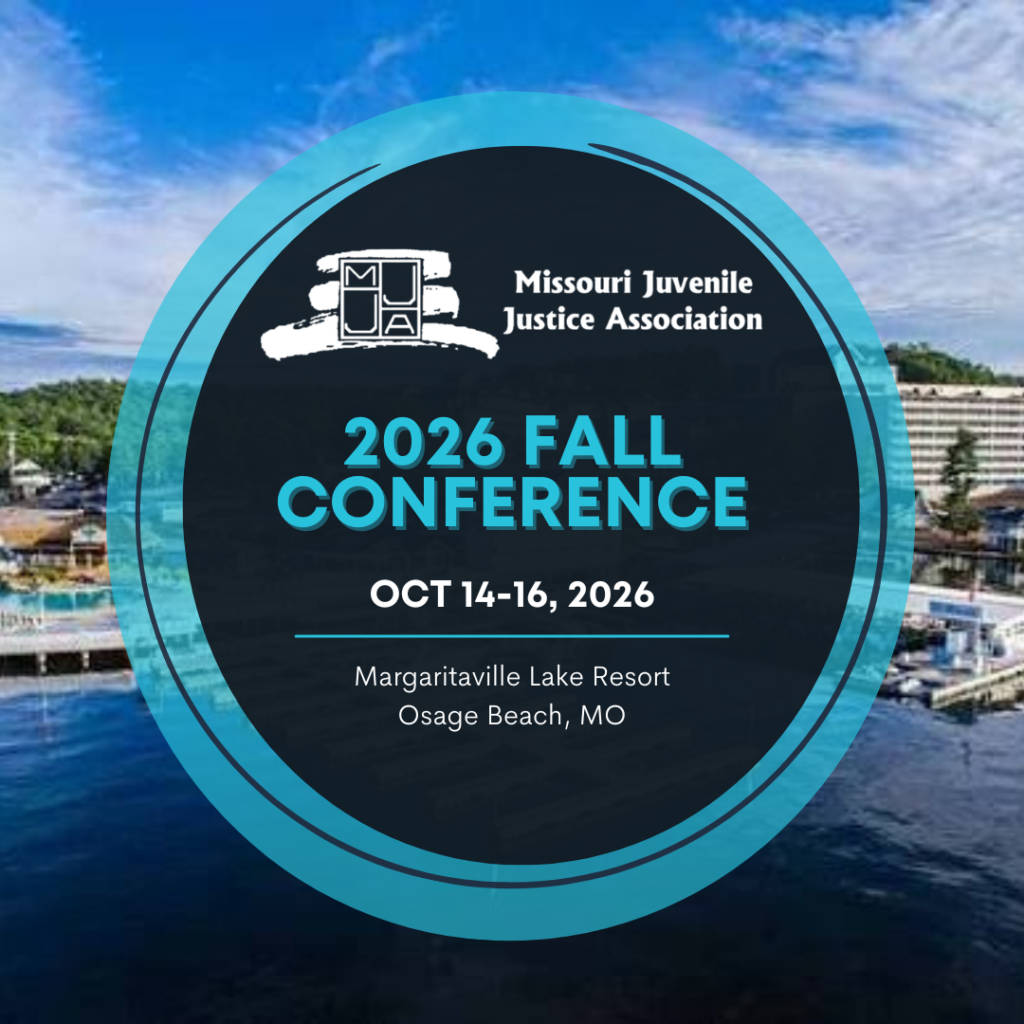
MJJA 2026 Fall Conference

Join the Missouri Juvenile Justice Association for our three-day Fall Conference, a comprehensive gathering dedicated to the heart of child welfare and juvenile justice. This isn’t just a conference; it’s a mission-driven space where Missouri’s leaders and agencies unite to sharpen our systems and advocate for the children we serve. Come prepared to bridge the gap between policy and practice, ensuring every youth in our state has a path toward a brighter tomorrow.
This conference is tailored for:
Juvenile and Family Court Personnel, Juvenile Detention Professionals, Judges, Attorneys, Children’s Division, School Resource Officers, Division of Youth Services, Law Enforcement, Guardians ad Litem, Court Appointed Special Advocates, Educators, Child Advocacy Centers, Child Care Providers, Youth Service Professionals, Social Workers, Private Practitioners, School Representatives, Parents, Community Leaders, State Lawmakers, Policymakers, School Resource Officers and anyone interested in juvenile justice issues.
Continuing Education Credits available from:
• MO Bar accredited for CLEs
• University of MO Columbia—School of Social Work CEUs
• POST Hours
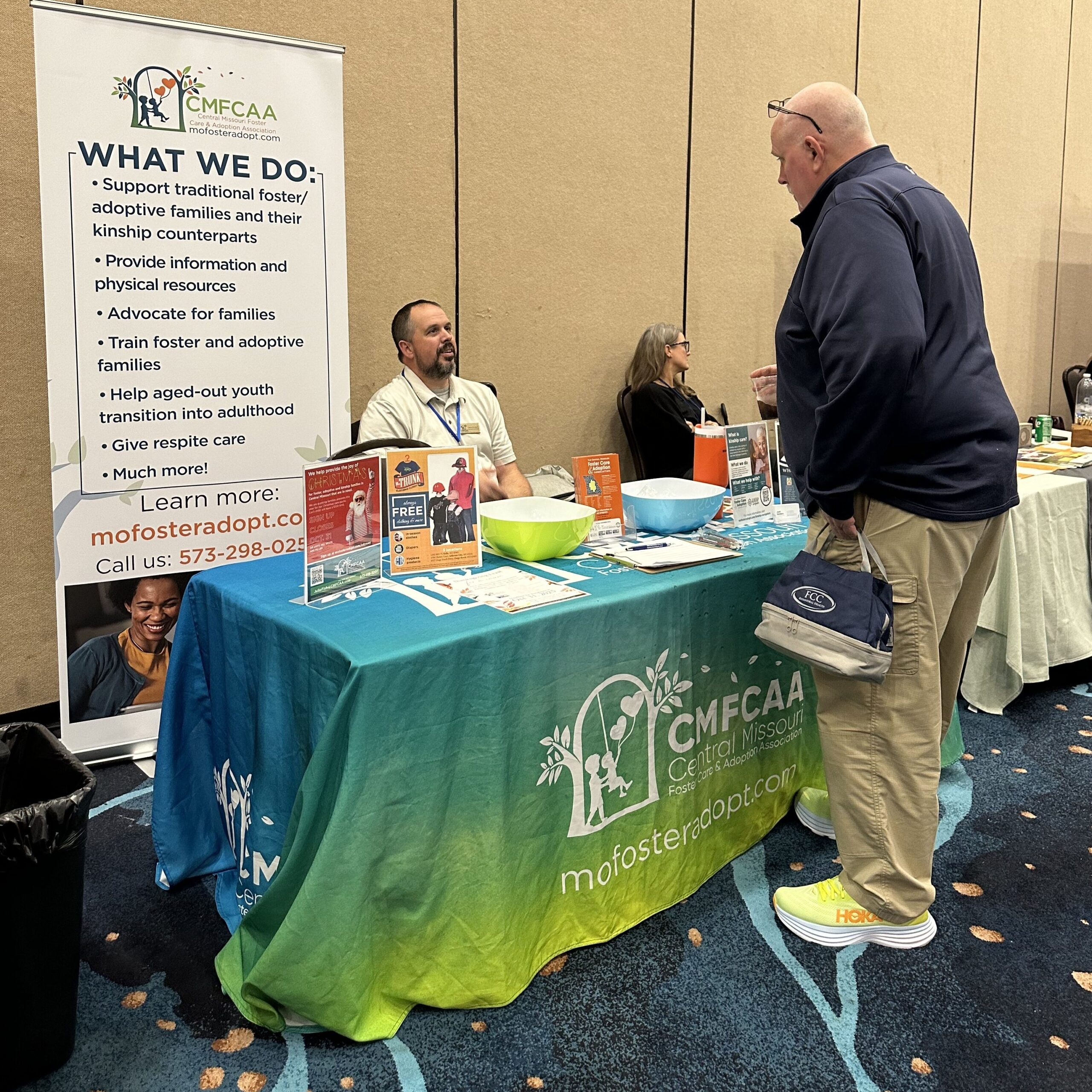
Be an Exhibitor at the Conference
Register & Pay by Invoice
Become a Member of MJJA

Hotel and Reservation Link
Reserve your room at the exclusive MJJA per diem rate of $149/night (plus tax) for October 14th and 15th. Room Block Cut-Off Date: September 15, 2026
Margaritaville Lake Resort
494 Tan Tar A Drive, State Road KK, Osage Beach, MO 65065
1-573-348-3131
Google Maps | Hotel Website
Please note that Margaritaville does not have general availability for the night of October 13th. To better accommodate our attendees’ travel, the conference features a later start on October 14th. Registration will open at 11AM, with the official program kicking off at 12:30PM. We recommend booking your stay starting the night of the 14th to align with the start of our programming.

Plenary Speakers
Day 1 Afternoon Plenary featuring:
Coming Soon
x
Day 2 Morning Plenary featuring:

Coming Soon
x
Day 2 Afternoon Plenary featuring:
Coming Soon
x
Day 3 Morning Plenary featuring:
Coming Soon
x
Workshops
(More Information Coming Soon.)
Wednesday, October 14
Topic: x
Speaker: x
Description: x
Topic: x
Speaker: x
Description: x
Topic: Accountability: The Dilemma of Parental Culpability
Speaker: Dr. Gary L. Hill, Lincoln University Vice President of Campus Culture & Chief of Police
Description: In recent years, the United States has experienced a significant shift toward holding parents legally accountable for their children’ s criminal behavior, particularly in cases involving youth violence and mass shootings.
(Obj: #2) High-profile prosecutions, such as the Crumbley case, have expanded the scope of parental criminal liability by emphasizing factors like failure to act on warning signs and allowing access to firearms. This trend reflects a broader movement toward increased accountability not only for parents, but also for school officials and institutions.
(Obj: #1) Parental responsibility laws fall into three main categories: civil liability (financial responsibility), status offenses (e.g., truancy), and criminal liability (rare but increasing in serious cases). While these laws aim to deter juvenile delinquency and promote responsible parenting, their effectiveness remains uncertain. Research shows no clear evidence that such laws reduce youth offending, and many parents are unaware of their legal responsibilities.
(Obj: #4) A key concern is that these laws often oversimplify the causes of juvenile delinquency. Youth behavior is influenced by multiple factors beyond parenting, including peer pressure, socioeconomic conditions, mental health, and environmental influences. Although parental monitoring and safe firearm storage can reduce risks, they are not solely determinative.
{Obj: #3) The expansion of parental liability raises significant ethical and legal concerns. Critics argue that these laws may violate due process, particularly when strict liability standards presume parental guilt without proof of intent or negligence. (Obj: #6) Additionally, enforcement disproportionately impacts marginalized communities, including Black, low-income, and single-parent households, exacerbating existing inequalities. Gender bias is also evident, with mothers often facing greater scrutiny and blame.
From the perspective of juveniles, most do not believe their parents are responsible for their actions, though many acknowledge that the possibility of parental punishment could deter their behavior. This highlights a tension between perceptions of accountability and the potential deterrent effect of these laws.
(Obj: #5) The broader juvenile justice system has also shifted from a rehabilitative model toward a more punitive approach, influenced in part by exaggerated fears of youth violence, such as the “super-predator” myth. Evidence suggests that harsher measures, including transferring juveniles to adult courts, may increase recidivism rather than reduce it.
Given these challenges, many experts advocate for alternative approaches that emphasize prevention and support rather than punishment. These include restorative justice programs, family-based interventions, mental health services, and expanded roles for juvenile or family courts that involve parents without criminalizing them.
Overall, while parental responsibility laws aim to enhance accountability and public safety, their long-term effectiveness is unclear, and they risk unintended consequences such as family instability and systemic inequality. Future policy efforts should focus on balanced, evidence-based strategies that address the root causes of youth offending while promoting fairness and rehabilitation.
Topic: x
Speakers: x
Description: x
Thursday, October 15
MORNING WORKSHOPS
Topic: x
Speaker: x
Description: x
Topic:x
Speaker: x
Description: x
Topic: x
Speaker: x
Description: x
Topic: x
Speaker: x
Description: x
AFTERNOON WORKSHOPS
Topic: x
Speaker: x
Description: x
Topic: x
Speaker: x
Description: x
Topic: Certified Pending Trial…. From Juvenile Detention to Adult Jail and Beyond
Speakers: Chris Yeager (Missouri Department of Public Safety) and Amy Sax (Missouri Division of Youth Services)
Description: In December 2018, the federal Juvenile Justice and Delinquency Prevention (JJDP) Act was reauthorized. The JJDP Act, as amended, made significant changes to how juveniles are held pending trial in the adult criminal justice system. Physically transferring a juvenile to a jail or lockup for adults following certification is no longer automatic. Now, certified juveniles are to remain placed in secure juvenile facilities pending the outcome of their criminal trial. However, there is a judicial process for transferring a certified juvenile to an adult jail when it is in the “interest of justice.” In 2021, Missouri codified these protections in Section 211.072, RSMo This presentation will review the initial transfer process, the subsequent required hearings, and the documentation necessary to ensure the state’s compliance with Section 223(a)(11)(B) of the JJDP Act and Chapter 211.072 of the Missouri Revised Statutes.
In addition, this presentation will provide attendees with an overview of Dual Jurisdiction sentencing as authorized under RSMo 211.073, Missouri’s blended sentencing statute, and the Dual Jurisdiction (DJ) Program administered by the Division of Youth Services (DYS). The session will focus on the statutory framework and legislative intent of RSMo 211.073, which permits certified youth to receive a dual sentence to the Division of Youth Services and the Department of Corrections (DOC). Attendees will receive education on how the DYS’ Dual Jurisdiction Program functions within the statutory structure, including eligibility considerations and the assessment process. This session is designed to support a clear, consistent understanding of RSMo 211.073 and the role of the Division of Youth Services Dual Jurisdiction Program within Missouri’s blended sentencing framework.
Topic: x
Speaker: x
Description: x
Friday, October 16
Topic:x
Speaker: x
Description: x
Topic: x
Speaker: x
Description: x
Topic: x
Speaker: x
Description: x
Topic: x
Speakers: x
Description: x
Conference Registration Rates
MJJA Member Rate: $250
Registration for members of MJJA to attend the conference workshops, meals, breaks and activities as noted on the agenda.
Non-Member Rate: $320
Registration to attend the conference workshops, meals, breaks and activities as noted on the agenda. Comes with a complementary year membership of MJJA.
Day Rate: $150
Attend one day of the conference.
Exhibitor Rate: $425
Includes exhibit table and 1 representative from your organization to participate in the conference workshops, meals, breaks, and activities listed in the agenda.
Add an additional ticket to your registration for $125 (Workshops not included)
MJJA Sponsor Member: 2 Registrations Included with Membership
As a Corporate Sponsor of MJJA, you receive 2 admissions to each conference. Includes all workshops, meals and activities as noted on the conference agenda. You may also receive discounted fees to exhibit.
Add an additional ticket to your registration for $125
Scholarships Available:
MJJA is able to provide scholarships for professionals to attend the Spring conference.
Juvenile Justice and Child Welfare professionals are invited to apply for a scholarship which covers registration and up to two nights of lodging. To be eligible for lodging, the recipient must travel 75 miles or more to the conference location, otherwise the scholarship will cover registration only. You do not have to be a member of MJJA to receive this scholarship. Please make sure you have permission from your agency leadership before applying.
DOWNLOAD HERE: SCHOLARSHIP APPLICATION FORM
Deadline: Scholarship applications must be completed and sent to info@mjja.org, no later than 5pm on Friday, September 11th. Notification to recipients will be made by September 14th at 5pm.
Schedule
Wednesday, October 14
11:00am
12:30pm
1:15pm
2:30pm – 2:45pm
2:45pm – 4:30pm
Event Check-In Opens
Opening Remarks
Plenary
Refreshment Break*
Workshops
Thursday, October 15
7:30 am – 8:15am
8:15am – 8:30am
8:30am – 10:00am
10:00am – 10:15 am
10:15am – 12:00pm
12:00pm – 1:30pm
1:30pm – 2:30pm
2:30pm – 2:45pm
2:45pm – 4:30pm
6:00pm
Breakfast*
Morning Welcome
Plenary
Refreshment Break*
Workshops
Lunch*
Plenary
Refreshment Break*
Workshops
President’s Reception
Friday, October 16
7:30 am – 8:30am
8:30am – 9:30am
9:30am – 9:45am
9:45am – 11:00am
11:30am
Breakfast*
Plenary
Break
Workshops
Conference Adjourns
* Indicates which meals/breaks MJJA provides with conference registration
A very special thank you to our MJJA Corporate Sponsors: